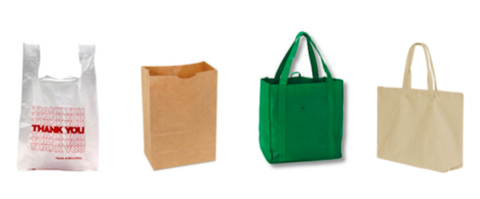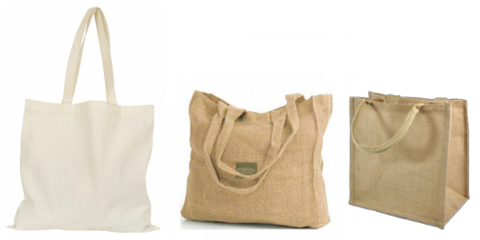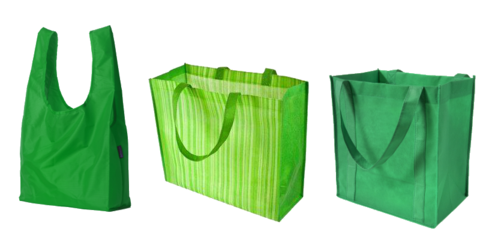
Nylon is a synthetic fiber with a silky texture, commonly used in outdoor gear such as sleeping bags, tents, rope. Other common uses include umbrellas, clothes, and parachutes.
Nylon was originally created for use as a lightweight material during WWII and was most popularly used in parachutes.
Nylon is lightweight, strong, and dries quickly, which is why it’s commonly used for outdoor gear.
Similar to other plastics, nylon is derived from petroleum.
Nylon has several environmental concerns you should be aware of. But, if used properly it can be a tool to help us be more environmentally friendly during out transition away from single use plastics.
ENVIRONMENTAL IMPACT OF NYLON BAGS
Nylon is made in a very similar process to polypropylene, another plastic based fabric.
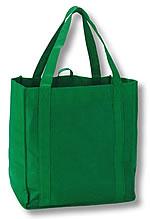
Polypropylene Bag
See the full comparison of plastic bags vs alternatives here: Environmental Breakdown (this breakdown does not include nylon, but does include its close relative polypropylene)
As with all plastic-based fabrics, the majority of the environmental impact is concentrated around three main points:
Resources – They are made from petroleum, a non-renewable resource which contributes to global warming and has environmental impacts via extraction.
Energy Use – The process of making this material is relatively energy intensive which contributes to global warming.
Disposal – Being a plastic-based product nylon can be recycled but is not biodegradable, therefore it is a risk to the natural environment if not disposed properly.
Main Considerations for Environmental Impact:
Production – what is the impact of producing one bag?
Materials – Originates from petroleum which is a non-renewable resource
Energy Input – High energy input requirement (similar to other plastics)
Use – what is the impact of using one bag?
Durable – so it usually has a long life
No Known Health Implications – Does not have health concerns during use (unlike containers with BPA)
Post Use – what is the impact of disposal?
Non-biodegradable – Similar degradability to other plastics
Recyclable – Nylon can be recycled or repurposed, but it requires considerable energy
Are nylon bags more environmentally friendly than plastic bags or other types of bags?
Quick Answer:
If used properly a nylon bag is much more environmentally friendly than the most common alternatives: disposable plastic bags, cotton totes, and other types of plastic-based bags.
Detailed Explanation:
Nylon bags are similar in production, use, and post use to polypropylene bags. They generally use less material to be made than polypropylene bags so they may have a slightly lower environmental impact per bag.
The polypropylene bag has a breakeven number of 14 uses. This means that you would need to use the bag 14 times before it becomes more environmentally friendly than using a disposable plastic bag.
We do not have reliable environmental impact report for nylon bags right now. (if you have empirical data that can help us answer this questions please let us know: info@terngoods.com)
Our best estimate is that nylon bags have a breakeven number close to polypropylene bags.
The Tern Pack Down
Version 1 – Our current pack down bag is made from nylon. We are looking into both recycled and reclaimed nylon for our next series which will significantly improve the life cycle impact.
Our bags are made to be durable and be used daily for several years.
Our reason for the pack down: keep this bag with you so you never forget and can always turn down plastic. We hated the feeling when you need to get a few things at the store (too many to carry without a bag) and you’ve forgotten your reusable. Other “colapsable” bags are still too bulky. So we created the Tern pack down which is half the size of most “packable” bags on the market.
If you use your Tern pack down bag…
3 times per week
You will displace over 150 bags in a year!
Whether you use ours or your own, we applaud you. Let us know how many single use plastic bags you’re turning down every week, month, or year!
The problem with plastic isn’t only about the visible pollution that’s evident everywhere we look today.
Plastics also make a significant – and growing – contribution to man-made climate change.
How do plastics contribute to climate change?
All plastic is made from carbon, but while biopolymers or bioplastics use carbon derived from natural materials, man-made plastic uses carbon derived from oil.
Most plastics are produced by a process of ‘cracking’ and refining crude oil, natural gas and other petroleum products, otherwise known as fossil feedstock. The feedstock is broken down into various constituent hydrocarbons such as ethylene, propylene and styrene. These are further processed to make plastic pellets known as ‘nurdles’, ready to be extruded or molded into a wide range of plastic products.
The processes used to extract the oil or gas from the ground use huge quantities of fossil fuel energy, releasing greenhouse gases and other pollutants into the air. More energy is used to transport the raw materials to manufacturing facilities, and subsequently to produce, transport and dispose of the end products.
The entire process is fuel intensive and carbon heavy; around 4% of current global oil consumption is turned into plastic, and another 4% is used to power plastic manufacturing processes[i], emitting many billions of tons of carbon dioxide into the atmosphere every year. The process of making each kilogram of virgin plastic releases 2-3kg of carbon dioxide.
Trucost, a research arm of the financial-information provider Standard & Poor’s, has put the overall social and environmental cost of plastic pollution at $139bn a year, half of which arises from the climate effects of greenhouse-gas emissions linked to producing and transporting plastic.
What types of plastics are causing the biggest problem?
Although there are many types of plastic, the five most common make up around 85% of the world’s plastic consumption by weight. These five plastics are:
Polyethylene (32% of global demand)
Polypropylene (23%);
Polyvinyl chloride or PVC (16%)
Polystyrene (7%)
Polyethylene terephthalate or PET (7%)
Propylene is the primary feedstock for polypropylene; ethylene is the primary feedstock for the other four[ii] – but all are derived from fossil fuels.
We shouldn’t forget that it’s not just production of plastics that accelerate climate change; a large proportion of the waste plastic that is thrown away is incinerated (around 36% in Europe[iii]).
Where this takes place in an energy-from-waste plant, it can be argued that it is a form of renewable energy and more sustainable than some other energy sources. This type of combustion does, however, still emit carbon dioxide (and other airborne pollutants) and contributes towards global warming.
How much of a problem is this for the climate?
Plastics can be made from other raw materials including biomass in the form of starch, cellulose, sugars, organic waste and vegetable oils. In fact, the very first plastics were made well before oil was used as a feedstock.
However, the convenience of hydrocarbon cracking and availability of oil means that today, more than 99% of plastics are produced from chemicals sourced from fossil fuels[iv].
And the problem is likely to get worse. The availability of cheap shale gas in the US is driving new investments in plastics manufacturing facilities, with 264 new or expanded factories planned in the US alone[v].
In just five years’ time, these developments could increase global plastics production capacity by one third, locking-in manufacturers to produce ever greater volumes of plastics for years to come.
The World Economic Forum estimates that by 2050, plastics will be responsible for nearly 15% of global carbon emissions, making it a bigger climate polluter than aviation, which is currently accountable for 12% of global carbon emissions.
Should be concerned for the future?
At a time when the world’s nations are attempting to cut harmful greenhouse gas emissions, the continued increase in the use of fossil fuels in the plastics industry is unsustainable.
To limit global warming to below 2 degrees Celsius above pre-industrial levels, in accordance with the 2015 Paris Agreement, we need to reduce the amount of fossil fuels used to produce single-use, disposable plastic, in particular.
If we fail to achieve the Paris goals, we face the consequences of catastrophic climate change; is our addiction to plastic really worth the risk?
Do you live in an area where plastic bags are taxed or banned?
More than 20 U.S. states and 150+ cities and counties have already banned plastic bags, and a growing number of countries around the world are also banning or taxing their use.
Why is this happening and how can you respond?
Why are plastic bags being banned or taxed?
Around 1 trillion plastic bags are consumed worldwide every year, but the average bag is used for just 12 minutes before being thrown away and only one in 200 is recycled. The billions of bags that end up as litter are harmful to wildlife, the natural environment and human health, as well as being very costly to clean up.
There are a number of different strategies you can employ to cut down on the number of plastic bags you use and minimize their environmental impact. Which is the most effective?
We’ve ranked the ways of reducing your impact according to the hierarchy of ‘Refuse, Reuse, Repurpose, Recycle’.
#1 Refuse plastic, take your own reusable bags
In the U.S., the average family accumulates 15 plastic bags on each trip to the grocery store. If they shop weekly, that’s 780 bags a year! (and some estimates are higher!)
Cut out plastic bags entirely by taking your own reusable shopping bags instead. There’s plenty of choice available; check out the top 8 alternatives here.
Choosing reusable bags can have the most impact of all – but be sure to select the most eco-friendly bag you can find that suits your needs.
#2 Refuse plastic, choose paper bags
Forgotten your reusable bag? If you have the option, choose paper bags rather than plastic to carry home your groceries. Although they take more energy to produce, paper bags can be easily recycled or composted, so they’re much less harmful to the environment after they have served their purpose.
Make sure to dispose of your paper bags carefully though; around 80 percent of all paper bags end up in landfill.
#3 Reuse your ‘single use’ plastic bags
They might be designed to be used just once, but there’s plenty of life left in most plastic bags after you’ve emptied out the groceries. If you find you have accumulated a few plastic bags, simply take them with you next time you visit the store and keep using them until they are no longer fit for the job.
#4 Repurpose your plastic bags
Alternatively, find new uses for your plastic bags: Use them to line the trash can, to pick up after your dog, or even use them as lightweight packaging material in place of bubble wrap or packing peanuts. Each time you reuse a plastic bag – even if it’s for a different purpose – you’re reducing its environmental impact.
#5 Recycle plastic bags
It’s unavoidable; sometimes we all end up with a few plastic bags. When they’ve been used and reused and they’re at the end of their life, the only remaining option is to recycle them.
Most curbside recycling collection systems can’t handle plastic bags, so you might need to take them to a drop-off recycling location instead. Most large grocery chains, home improvement stores and retailers have plastic bag recycling collection bins, so take them back there to make sure they are processed correctly and don’t end up in landfill.
Refuse plastic – choose your alternative
The best option is always to choose a reusable bag. Make sure you take your time and choose a good bag that will last you. The more times you can use it the more environmentally friendly it will be.
And remember, if you don’t have your reusable bag with you and you need to use plastic bags, you can minimize the environmental impact by reusing, repurposing and recycling them.
We are beginning to see more and more media coverage on the impact of plastics on the environment. And once you begin to look around, there seems to be plastic everywhere you look: your bathroom, your grocery store, your favorite restaurant.
It can be overwhelming to try to think of a plastic free world.
However, there are many steps you can take to start to reduce your plastic use in many areas. This is a list of 25 different ways you can reduce plastic use in your everyday life.
Glass, Ceramic, and Other Alternative Materials
Use a reusable water bottle. In the United States alone, Americans used 50 billion plastic water bottles. The demand for plastic water bottles in the US requires about 17 million barrels of oil and enough energy to power 190,000 homes. There are numerous benefits to using a reusable water bottle, instead of purchasing a disposable one every time.
Invest in a reusable shopping bag. There are many options out there for reusable bags, so it’s easy to find one that suits your needs. Using a reusable shopping bag made of cotton, jute, linen, or even durable plastic eliminates the need for disposable plastic bags at the grocery store, at your favorite retailer, and even when eating out.
Use reusable a coffee cup. While many coffee cups seem to be made out of paper, they are actually lined in plastic in order to properly hold that frothy cappuccino. Start bringing your own coffee cup to your favorite coffee shop on the way to work, or request a ceramic cup if dining in, to reduce the amount of to-go coffee cups making their way to the landfill each day.
Use mesh produce bags. Its seems like it’s nearly impossible to avoid plastic in the produce aisle. Fruits and veggies are actually coming pre-cut and pre-packaged these days! An easy way to reduce your plastic use on your next grocery trip is to buy whole fruits and vegetables and carry them in a reusable mesh produce bag.
Line small trash bins with paper bags. Instead of small plastic bags, use paper grocery bags to line your bins if you happen to have them.
Use matches or refillable lighters. Disposable plastic lighters are a major source of unnecessary waste that ends up in landfills, on beaches, and hardly ever recycled. Start using matches instead, or invest in a refillable lighter to avoid throwing away your next dud Bic.
At the Grocery Store
Return plastic packages back to grocer. When it comes to berries, tomatoes, and other certain fruits and veggies, they’re almost always packaged in small plastic containers. Ask your local grocer if it’s possible to return these packages so they can be recycled or reused.
Buy dried goods in bulk. Another way to reduce your plastic use in the grocery store is to buy dried goods in the bulk section. The bulk section is not only more eco-friendly, but also cheaper. Instead of buying rice, nuts, and cereal in plastic, bring your own reusable container to the bulk section and save some money while your at it!
Buy eggs in cardboard containers, not Styrofoam. Eggs are now being sold in Styrofoam cartons instead of cardboard. If you have the choice between the two, always choose cardboard. Styrofoam is not biodegradable and stays in the environment for up to one million years.
Avoid chewing gum.Chewing gum is actually made of synthetic rubber, which is a fancy word for plastic. While chewing gum used to be made from a certain tree sap, it’s now made with fillers, emulsifiers, and polyvinyl acetate, a thermoplastic. Ditch the gum for a mint or other alternatives to avoid chewing on plastic next time!
Buy fresh, not frozen. Buying frozen foods and produce uses a lot of unnecessary plastic packaging. Even the frozen pizza boxes that seem to be made of cardboard are actually lined with plastic. By avoiding the frozen foods section and buying fresh, you are cutting out the plastic packaging used to preserve such options.
Buy local. Always buy local when possible. Start shopping at your local farmers market, soap shop, or grocer. Not only are you directly supporting those in your community, you are more often than not avoiding unnecessary plastic packaging with their products and reducing the transportation cost of goods.
Take Out, Dining Out, and Storing Food
Bring your own container. Going out to eat? Bring your own container with you to store possible leftovers. Over 120,000 of plastic and foam take out containers combined were found in beach cleanups last year. Prepare beforehand and bring your own next time you go out to eat.
Avoid plastic cutlery when eating out. If you know you are heading straight home with your carry out, decline the option for plastic cutlery and use your own. Or, if you eat on the go frequently, invest in reusable cutlery to carry with you.
Stop using plastic straws. A simple and easy way to reduce your plastic use is to say no to plastic straws when dining out. Many companies are beginning to make this transition themselves, including Starbucks and McDonalds. If you’re one to hesitate to give up that sweet satisfaction of sipping up that delicious drink, consider investing in a metal or durable plastic straw that is reusable.
Use glass food storage containers. We all know it’s easy to get carried away with plastic Tupperware (and somehow you can never find the proper fitting lid to any of them!) So next time you are looking to purchase storage containers for your leftovers, try buying glass containers. They’re both better for your health (BPA free) and better for the environment.
Home Goods, Cleaners, and Toiletries
Buy boxes, not bottles. Many household items, like detergent and cleaning products are offered in both plastic bottles and cardboard boxes. Choose the boxed option! Or, if you’d like to transition to more eco-friendly products overall, start making your own! Other eco-friendly options include shampoo bars and plastic-free toothpaste.
Seek out refill stations. It is becoming more and more common to find refill stations for common household products and soaps. Try to find a refill station near you for soap, detergent, and other hygiene products and skip the next plastic bottle purchase.
Avoid plastic clothes hangers and hampers. Another item we don’t normally think about is the plastic hanger. Try using wire hangers or even wooden hangers next time you run out. You can also find hampers made of various other materials including metal, cotton, wood, and wicker.
Avoid clothing made of synthetic materials. While we’re on the topic of wardrobe options, try to avoid clothing made of synthetic fibers. Material such as lycra, polyester, nylon, and spandex actually contain polymers (plastic) and chemicals that eventually enter the environment and ocean when discarded. Look for clothing made of natural materials instead, such as cotton, linen, and wool.
Stop using disposable razors. The EPA has estimated that 2 billion disposable razors are bought and used each year. Instead of disposable razors, purchase reusable razors with disposable heads, or a safety razor.
Buy sustainable toothbrushes. Another bathroom product people usually glance over is their toothbrush. Most common use toothbrushes are made of plastic and thrown away. Try to recycle your plastic toothbrushes and purchase a more eco-friendly alternative, such as wooden or bamboo toothbrushes.
Use cloth diapers. Instead of using disposable diapers, which contribute to 5. millions tons of waste each year, try using cloth diapers.
Use sustainable menstrual products. Conventional pads and tampons are now commonly made with plastic and synthetic fibers, instead of the cotton they used to be made with. This is not only harmful for the environment, but also uncomfortable and toxic for the body. There are many natural options out there for women that are both eco-friendly and better for your body, including silicone menstrual cups and organic cotton pads and tampons.
Avoid microbeads. Microbeads are actually just small (less than 1 millimeter) pieces of plastic that are added to common hygiene products. While many countries are in the process of banning them due to their easy access to lakes, rivers, and oceans, it is best to avoid those that continue to linger.
This list is a comprehensive list meant to provide a variety of options to easily eliminate unnecessary plastics from your life. There are also many books available that provide a more in-depth look at how you can create a plastic-free lifestyle. Some great options include Life Without Plastic by Chantal Plamondon and Jay Sinha, Zero Waste Home by Bea Johnson, and Plastic Free: How I Kicked the Plastic Habit and How You Can Too by Beth Terry.
Regardless of if you find two or three of these achievable this year, all of these, or kick start your research into a plastic free life, realize that reducing your plastic use is not only achievable, but can be easy in manageable steps. Once you begin to eliminate plastics from your life, you’ll begin to see other ways to reduce your impact on the environment; slowly lifting the burden of plastic pollution one item at a time.
Plastic production has increased twenty-fold over the last 50 years – Over 300 million tons of plastic is being produced every year. And it’s adding up. Eight million metric tons of that enters the ocean each year.
Our dependency on plastics for their convenience and versatility has grown exponentially. And it is projected to grow still. However, without proper facilities to dispose of all this waste, our exceeding consumption of plastics is guaranteed to create irreparable damage to the oceans, the earth, and possibly our own population.
There’s been very little action at the global or state level, though, to resolve this problem. So what can you do about it personally? Well, one way to directly counteract the plastic problem is to stop it from the source by reducing your consumption of plastics.
How do my Individual Actions as a Consumer Help?
By using less plastic, even on the individual level, it means that less plastic is being purchased and used. Less plastic being used means that less plastic needs to be made, and therefore more plastic is being prevented from entering the environment to begin with.
For example, if just one individual starts using a reusable water bottle, an average of 217 plastic water bottles will be saved over the course of one year. Just one individual’s actions have the potential to prevent 217 plastic water bottles from entering landfills and the natural environment.
Not only that, but a reduction in plastic consumption on the individual level has the power to affect the overall demand for plastic products.
All the time, companies are looking to find ways to better cater to consumer needs. One of the most tangible examples of this can be seen in our current food market. The sales growth of organic food has doubled in a matter of four years. Reacting to the demand, more and more food retailers such as Walmart, Costco, and Kroger have made organic food more prevalent and accessible to consumers in their stores.
By choosing not to purchase and use unnecessary plastic items like single-use water bottles, traditional plastic toothbrushes, or say, plastic straws, the demand for such products decreases, which, in turn, decreases production and supply.
As the individual begins to consume less, the manufacture of plastics begins to decrease and there’s potential for massive change on a cultural level.
The less plastic we use in our daily lives, the easier it will be to shift our culture from a single-use frame of mind.
We are already seeing this shift in grocery stores as more and more people are taking action against plastics. Earlier this year, Amsterdam created one of the first plastic-free grocery aisles in direct response to consumers’ demand for less plastic.
How big of a difference will this make though? Can an individual’s actions really add up?
The answer is: Yes.
Just ‘one’ Person
As we go through the day, most people don’t think about exactly how much plastic they consume. It’s just one coffee cup in the morning, one plastic bag of groceries, one night out that required a take-out container. But these things add up, and at the individual level, we consume a lot of plastic.
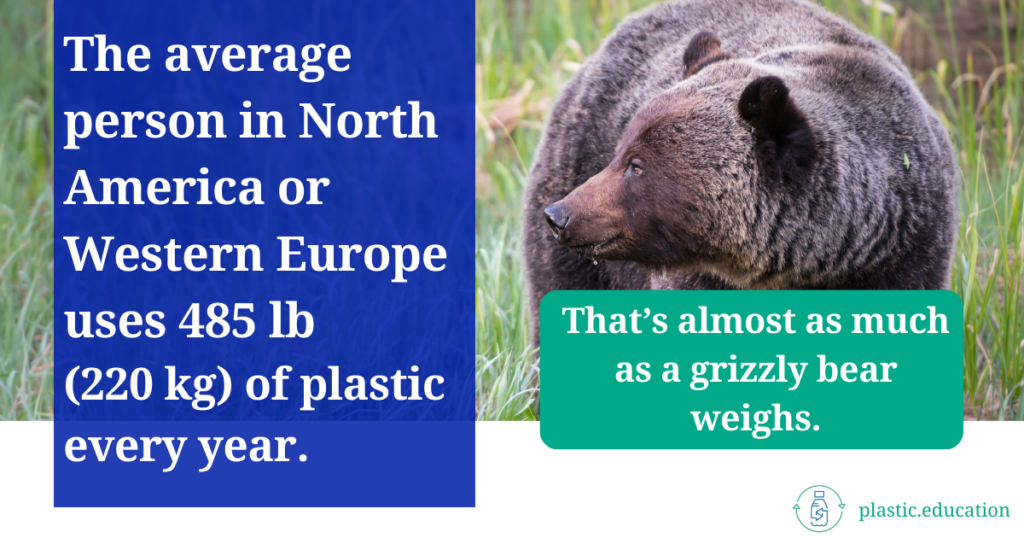
— The average person in North America or Western Europe consumes 220 kg of plastic per year.
— In the U.S. alone, the average person produces more than 2.5 kg of waste every day.
— Purchasing coffee on the go? One to-go coffee per day creates about 10.5 kg of waste in one year.
— From grocery stores, to clothing stores, to restaurant take-out, plastic bags are used for everything.
— The average person uses 300 single-use plastic bags per year in the U.S.
These numbers add up quickly. But fortunately, that also means that simple changes can make significant changes. So what can you do as an individual to consume less plastic?
Invest in…
A reusable water bottle. By using a reusable water bottle, one individual can save 217 plastic water bottles per year.
A reusable tote. Single use plastic bags have become an overwhelming problem globally. Opt for using a reusable tote at the grocery store or choose paper instead of plastic.
A reusable coffee mug. Reduce the amount of disposable cups you use by simply bringing your own.
Avoid…
Plastic straws. Americans use 500 straws every day. Reduce plastic consumption by merely choosing to drink your beverage without a straw.
Liquid soap. Start using bar soap rather than liquid body soap. Some retailers even carry bar shampoo.
Packaged produce. Retailers have begun selling produce packaged in plastic. Buy whole, fresh produce instead to avoid plastic packaging.
Opt for…
Products sold in alternative packaging. On average, 31 kg of plastic packaging waste is produced per person per year in the EU. Try to buy goods sold in glass or paper packaging or bulk foods filled in your own containers.
How Should I go About Reducing my Consumption of Plastic?
There are so many ways to reduce your consumption of plastic in your daily life. Easier said than done though, right? Where do you start?
1) As famously quoted by folk singer and social activist Pete Seeger, “The first step in solving a problem is recognizing that there is one.” One of the most important steps to reducing your plastic consumption is to be aware of how much you consume.
2) Ditch the plastic you can, whenever you can. We are confronted with unnecessary plastics all the time. Once you start to recognize them, it’s easy to opt out or find a different option.
3) Which brings us to the last – finding alternatives. Invest in alternative options like reusable bottles, cups, and bags. Experiment with eco-alternatives, such as bamboo toothbrushes or bar shampoo.
These days, it seems like plastic is everywhere you look. It’s packaging your food, holding your groceries, conveniently providing water for you, wrapping your uneaten food, filling your bathroom, housing your cleaning products; truly pervading every aspect of daily life.
Yet unlike food, wood, or any other organic materials we use in day to day life, plastic is not biodegradable – meaning it can’t be eaten and decomposed by other organisms. In fact, many plastics aren’t even degradable. And those that are degradable merely break into smaller and smaller pieces, leaching chemicals and toxins into the environment and the organisms around it.
Because it takes even the most easily degradable and common plastics between 10 and 1,000 years to decompose, plastics are building up to an unmanageable amount. We are finding traces of plastic pollution in rivers, oceans, beaches, and even in animals and soils.
It is yet unknown how human consumption of plastic toxins affect our health, but studies have found plastics in our seafood and the domestic animals brought in for slaughter.
Research has also been conducted by clean up crews, such as the Ocean Conservancy, to document the most common culprits of plastic pollution found in the ocean and on beaches. Because of organizations such as this, we are beginning to better understand common pollutants and how to manage them.
The top ten most common plastic items found during the international coastal cleanup this year include (2018):
Cigarette butts (2,412,151)
Food wrappers (1,739,743)
Plastic beverage bottles (1,569,135)
Plastic bottle caps (1,091,107)
Plastic grocery bags (757,523)
Other plastic bags (746,211)
Straws (643,562)
Plastic take out containers (632,874)
Plastic lids (624,878)
Styrofoam take out containers (580,570)
Some of the biggest offenders of plastic pollution include plastic bags, take out containers, plastic bottles, straws, and disposable coffee mugs.
What is both unfortunate and hopeful is that almost all the items that make up these lists are single use plastics. These are items that are only used briefly for one purpose before being discarded. Fortunately though, due to their disposable nature, many of these items can not only be replaced, but avoided altogether.
Plastic Bags
On average, a plastic bag is only used for 12 minutes. And because they are so readily available, convenient, and easily discarded, we use on average about 500 billion to 1 trillion plastic bags a year, worldwide.
However, reducing plastic bag consumption can be simple and fairly easy. There are many things you can do to limit or stop your plastic bag use completely.
Decline the option for a plastic bag when your items are easy to carry.
Purchase your own reusable bag and bring it with you when you go shopping.
Use paper bags instead of plastic when they’re available.
Start using reusable produce bags to carry your produce, rather than the thin plastic bags provided.
Recycle and reuse the plastic bags that you do acquire.
As you begin to transition to more sustainable options like cotton or jute bags, backpacks, or reusable plastic bags, then your perspective on plastic will shift. Instead of seeing it as an integral part of daily life, you’ll start to see it as superfluous.
Plastic Packaging
Another major offender of plastic pollution is plastic packaging (‘Other Plastic Bags’). This can range from the bags your food is packaged in, the plastic bottles your cleaning products come in, the plastic your clothes or household items are packaged in, and even your bin bags.
There are many ways to avoid this group of plastics. One is to buy in bulk at the grocery store—storing dried goods in glass jars or durable plastic storage, rather than single-use plastic.
There are entire grocery stores being established that are dedicated to plastic-free packaging.
Another is to make your own cleaning products or buy products packaged in cardboard instead of plastic. Using biodegradable bin bags is another more eco-friendly option to replace traditional plastic trash bags. Transitioning to newspaper liners is also an option.
Plastic Straws
The plastic straw movement is gaining momentum around the world and continues to be at the forefront of sustainable transitions. Last year, the Ocean Conservancy found enough straws in their beach clean up to reach the height of over 10,000 palm trees.
McDonald’s announced their transition to paper straws in the UK and Ireland earlier this year. There are many other companies looking to change their policies on plastic straws in the coming years.
One of the easiest ways to reduce plastic straw pollution and to advocate for better options is to simply say no. Whether you’re ordering a cocktail at the bar or an iced coffee at your local Starbucks, decline the option for a straw.
Another way to enact change is to inquire about paper or metal straws at your local eatery. Show your favorite establishments that you’d like to see more sustainable options.
Plastic Beverage Bottles and Disposable Cups
More than 480 billion plastic water bottles were sold in 2016, and this number is expected to grow to 583.3 billion by 2021 if things do not change.
Disposable coffee cups, which are not only lined with plastic and therefore neither recyclable nor biodegradable, use over 20 million trees to meet the need of consumers each year. It is estimated that the US alone uses over 50 billion of these coffee cups each year.
The most economical and sustainable solution to disposable beverage bottles is to switch to a reusable one. Find yourself the perfect reusable water bottle or coffee mug to bring with you in your car, on the way to work, while exercising, or what ever the occasion.
Another way to reduce plastic water bottles is to reuse or recycle them. While not purchasing one in the first place is the best solution, if the situation cannot be avoided, recycling is the next best option.
Take Out Containers and Packaging
Take out containers also make up a significant portion of plastic pollution. Between plastic and Styrofoam containers, take out packaging is one of the top 10 items that pollute our beaches and waterways. And this does not include the plastic cutlery and/or plastic bags that typically accompany take out orders.
So what can you do to avoid this?
Decline any extra plastic ware with your food – bring your own cutlery, or use your own at home. Another great option is to skip the bag and carry the containers in your hands. Ask your favorite establishment if they can start carrying biodegradable take out containers. And finally, if you’re dining out, bring your own tupperware to place leftovers in!
Take a Stand
Individual actions are critical in the fight against plastic pollution. But individual actions alone will not be enough. It is also important to take a stand and work to effect local and national policy change. The two most important components of policy change include bans and taxes.
Bans on certain plastics have proven to be some of the most effective plastic pollution management solutions around the world. In California, where a plastic bag ban has been in effect since 2011, there has been an 89 percent reduction in plastic storm drain litter and 59 percent reduction in city streets and neighborhoods.
In Ireland, there has been a 95 percent reduction in plastic litter since their ban in 2002.
In Kenya, where one of the most drastic plastic bag bans went into effect last year, The Guardian reported a reduction in plastic the stomachs of animals for slaughter from 3 in 10 to 1 in 10.
In terms of clean up, plastic pollution is estimated to cost an estimated $13 billion each year, according to the UN Environment Program. When it comes to the natural capital cost of plastic use – including financial impacts from pollution issues – UNEP estimates the cost at $75 billion. This number can be reduced with effective disposal programs and proper plastic waste management, reducing costs to communities and the environment.
There are innumerable ways to reduce the plastic pollution that you create as an individual and to promote change within your community. While plastic pollution may seem like an unattainable problem to tackle, both individual action and the promotion of government and corporate cooperation will begin to curb the growing problem of plastic pollution worldwide.
When looking at a worldwide problem, it seems nearly impossible to stop yourself from asking, “But what can one person’s actions really achieve? Am I really going to make that much of a difference?”
When it comes to using plastics, the answer is always yes.
Take plastic bags for example: The average family in the United States accumulates around 60 plastic bags in a mere four trips to the grocery store. If that family went to the grocery store four times a month and made even one simple change – to bring their own bags – they would save over 700 plastic bags each year.
One of the simplest ways to reduce the impact of plastic pollution is to stop using plastic bags. Each year, 500 billion to 1 trillion plastic bags are consumed globally and only roughly 1 in 200 gets recycled.
Plastic bags take anywhere from 10-1,000 years to degrade by breaking into smaller and smaller pieces, building up in the natural environment, affecting wildlife, habitats, and human populations.
And aside from being non-biodegradable, plastic bags are a nuisance both in the environment and in the home—floating in the ocean, being eaten by wild and domestic animals, clogging drainage systems, and penetrating agricultural soil. By reducing your plastic bag use, you’re practicing a more cyclical lifestyle that not only reduces waste, but saves money and resources in the long run.
This may seem like an unrealistic goal for the average individual, but it doesn’t have to be! There are several steps that you can take to reduce your plastic bag use and eventually stop using plastic bags entirely.
Be aware. First, simply realize how many plastic bags you use throughout any given day; per week; per month. The first step in changing a habit is to recognize it in the first place. Start paying attention to how often you use plastic bags, how quickly you discard them, and in what circumstances you could go without one.
Decline the bag. Once you’re actively noticing your bag usage, start putting it into practice. Decline the bag! Buying one or two items at the grocery store? Opt to carry them out of the store in your hands, rather than using a plastic bag. See if the store has paper alternatives. Decline the plastic bag you’re offered for your carry-out containers. By simply pausing to consider the necessity of the bag you’re offered, you can begin to reduce your plastic bag use.
Recycle, recycle, recycle. Opt to either recycle your plastic bags at home, or try to return them to the store you received them from. If plastics are going to be in circulation, the best case scenario is that they are recycled into other usable materials.
Reuse. Notice you’ve been collecting a lot of plastic bags lately? Reuse them. Plastic bags can be used throughout the house as small bin liners, to hold other recycling, or on your next grocery trip.
Use reusable bags. What better way to reduce your plastic bag use than to stop using them? There are so many alternatives to plastic bags that can be used over and over again. Cotton, durable plastic, jute—Just to name a few. There are a variety of options out there for each individual. Find the right reusable bag for you and carry it with you, leave it in your car, or bring it to work, so that it’s on-hand when you need it.
Bring your own produce bags. Even when you bring your own bag to the grocery store, it seems nearly impossible to avoid plastic bags in the produce aisle. One of the best ways to stop using plastic bags entirely in the grocery store is to bring your own reusable produce bags.
Stop using plastic bin liners. A common household offender that often gets overlooked is the garbage bin liner. Each plastic bin liner goes directly into the landfill once it leaves your doorstep. An easy way to avoid this is to buy biodegradable bin liners, or opt to use newspaper to line your bins.
Educate and act! Look into recycling options in your community. Seek alternatives to other plastic items you use in your household. Ask your local grocer or shopping mall to start carrying more eco-friendly alternatives. Petition your local congressman to ban, tax, or create deposit schemes for your city or state. Tell a friend.
Plastic pollution is becoming more and more of an overwhelming problem, and it’s become obvious that action must be taken to solve it. Single-use plastics, like plastic bags, are some of the most prevalent and preventable pollutants, making them priority number one for individuals, businesses, and governments all over the world.
Reducing your plastic bag use is not only manageable, but also one of the most perceptible changes you can make to your lifestyle, making it an easy target for change. Try some, or all, of these tips and challenge yourself to stop using plastic bags altogether. As you begin to do so, see how quickly your kitchen cabinet becomes uncluttered, your trash less full, and your footprint smaller.
Before answering any questions it’s important to understand why this is even a debate. Varying opinions on whether disposable cups are worse or better for the environment than reusable alternatives stem from unfair comparisons.
A few reasons why people may be comparing apples to oranges:
Types – different types of disposable cups (paper, plastic, styrofoam) have varying impacts. Likewise, so do their reusable counterparts. This makes it difficult to make blanket statements like “all disposable cups are worse than reusable alternatives”
Focus – you can paint a different picture depending on which aspect of environmental impact you’re focusing on. Energy use, natural resource use, pollution, and emissions, are just a few of the different areas you can compare. To be fair, you have to consider the complete environmental impact of disposable vs reusable, not just one aspect.
Other – Other variables such as the technology used to manufacture the cup or how long it traveled to get the place of sale also change the environmental impact.
The Key Indicators of Environmental Impact
There are several variables to compare when it comes to rating the overall environmental impact of a product. Here are the main 3 areas and some of the considerations of each:
Production – What it takes to make the product
Input of energy and natural resources
Transportation of raw materials and finished product
Emissions and other pollutants from manufacturing
Use – How use of the product impacts humans or the environment
Impact on human health
Lifespan of the product
Environmental impact of use (if any) – example: washing of reusable cups
Post Use – How disposal of the product impacts the environment
Pollution of natural environment
Emissions from disposal (gasses from breakdown in landfill or incineration)
Cost of recycling
The total impact of a product can be calculated using our simplified formula:
Total Environmental Impact = Cost of Production + Cost of Use + Cost of Post Use
The Key Performance Indicators
There are also several different types of environmental impact. The most common types and the causes they are linked to include:
Emissions – global warming, air pollution
Natural Resource Use – deforestation, biodiversity loss, global warming
Pollution – biodiversity loss, degradation of natural environment
Some people may weight one factor as more important than another depending on their opinions of which environmental issue is most pressing.
The most common comparison for environmental impact is energy used to create, distribute, and dispose of the product.
Energy input is considered to be the primary indicator of environmental impact because it is tied to almost all other factors. It takes natural resources such as coal to create energy and once burned it contributes to emissions that fuel global warming.
In this comparison of disposable vs reusable cups I will draw from several studies about energy use in each phase: production, use, and post use.
It’s important to note that there are other considerations when buying a product such as the social responsibility of the company producing it. I’ll touch on these considerations in my summary.
Cost of Production
In general, producing one disposable cup has a lower environmental impact than producing one reusable cup or bottle.
Measurement of Energy Input Needed (kJ/Cup) to Produce 1 Unit:
Producing a styrofoam or paper cup requires much less energy input than reusable alternatives such as plastic, glass, or ceramic.
This probably isn’t a big surprise to you. Disposable cups are smaller, lighter, and easier to make, while their counterparts require more input of resources and energy.
Proponents of single use cups may stop here and claim that disposables are more energy efficient and therefore more environmentally friendly. But the most critical evaluation happens in the next two phases: Use and Post Use.
In general, when comparing 1 cup to 1 reusable cup, the production of disposable cups is in fact more eco friendly.
Cost of Use
It’s clear that the production of one disposable cup has a lower impact than one reusable alternative. But if you use over 300 disposables in a year, doesn’t that add up to be a greater impact than using only one reusable cup?
To calculate and compare the average cost of use for disposable cups vs reusables we have to answer one key question:
How many disposables are equal to the continued use of one reusable alternative?
The quick answer: this number ranges from 6 to 127 depending on various factors such as the type of reusable cup and how it is used.
Key Considerations – Washing Cups
A key factor in this aspect of the environmental impact of disposable vs reusable comes down to washing.
While disposables have no energy input necessary for their use, reusables do. In order to continue reusing a glass, plastic, or ceramic cup it needs to be washed which will contribute to its overall environmental impact.
Of course, there are different ways to wash cups and some are more eco friendly than others.
In general, washing by hand is more energy efficient than using a dishwasher. And washing with cold water is more energy efficient than washing with hot water.
The safest estimate to use is the energy use of a common household dishwasher.
Cost of Use: Summary
Considering the energy input to produce and to wash we can calculate a “break even” point, where using a reusable cup becomes as efficient as using a disposable cup.
The formula:
Break even number of uses = (Energy of Reusable cup)/(Energy of Disposable cup – Energy of wash)
The results:
Main Takeaways
Glass and plastic are the most energy efficient materials for reusable cups
When replacing paper cups it takes less than 20 uses to become more efficient
When replacing styrofoam cups (because energy input for this type is so low) it takes up to 127 uses
Most comparisons of disposable vs reusable cups end here. Although we’ve already determined that reusable cups are more eco friendly after continued use, we still don’t have the whole story.
What if all disposable cups are recycled and their materials are used over and over again?
We need to consider the environmental impact of disposal to have a complete understanding of how disposables stack up to reusables.
Cost of Disposal (post use)
The main factor to consider in disposal is how often cups are disposed of and how. Are they recyclable? What’s the impact of recycling them, sending them to the landfill, or other outcomes?
Are disposables recyclable?
Disposable cups are disposed of in mass and the most common type, used for coffee, are difficult to recycle. The vast majority of paper cups we use daily for takeaway drinks have a plastic lining in them that prevents to paper cup from becoming saturated and falling apart.
This plastic lining must be separated from the paper in the recycling process which makes recycling them difficult and costly. In fact, most recycling centers are not equipped to process them.
The result: Unfortunately right now only about 1% of disposable cups are recycled.
What is the cost of disposing single use cups?
It’s difficult to calculate the cost of disposing single use cups because of various scenarios. However, we should consider the following:
Collecting and transporting used cups is energy intensive (think trash trucks)
Once in a landfill cups may breakdown slowly in the right conditions but their plastics will take hundreds of years resulting in landfills that are wastelands
Greenhouse gas release from landfills is a major contributor to global warming
Cups that don’t make it to landfills pollute the natural environment
Incinerating disposable waste will recoup some of the energy but also results in emissions that contribute to global warming and air pollution
The sheer volume of disposable cups thrown away on a daily basis is hard to fathom (Starbucks alone produces 4 Billion each year)
How do reusables stack up?
Ceramic Cups – very little to no recycle potential but can last to thousands of uses if cared for and has little to no environmental impact in landfills
Plastic Alternatives – Many plastic alternatives can be recycled and will last for thousands of uses
Glass Cups – Can be recycled, will last for thousands of uses, and has little to no negative environmental impact in landfills
The bottom line
Reusable cups have a longer lifespan so their overall disposal impact is much lower than single use cups.
Most reusable cups can be recycled. Glass and ceramic are less of a threat to the natural environment because they will break down over time and do not contain synthetic chemicals, unlike styrofoam or the plastic lining of paper cups which do not biodegrade.
Disposal of single use cups poses other threats such as the cost of waste collection and the accumulation of these products in our oceans, when they are not taken to the landfill or incinerated.
OVERALL ASSESSMENT OF SINGLE USE VS REUSABLE
While it takes more energy to produce reusable cups, because they have a longer lifespan their overall environmental impact is much less than disposable cups.
Each type of disposable and reusable cup has its own variations in its impact on the environment. Some are better than others.
In general, the number of uses needed for a reusable bottle to be more eco friendly ranges from 6 to 127.
Reusable Options Overview
Glass cups are the best alternative. If you’re foregoing paper coffee cups by using a glass mug, you can be having a positive environmental impact in as few as 6 uses.
Reusable plastic cups are close behind glass. The break even point for reusable plastic cups can be as low as 7 uses.
Ceramic cups are also a good alternative but it will take more uses for them to become more environmentally friendly than disposable cups (as few as 15).
Disposable Options Overview: Plastic Cups vs. Paper Cups
If you need to use a disposable cup, you’re often left to choose between paper and plastic cups. As we discussed above, there are many factors that determine the true environmental impacts of each type of cup.
Paper cups can biodegrade. This lowers their environmental impact, as they breakdown over time, while plastic cups sit in landfills for years. However, the carbon footprint of paper cups is higher than plastic cups, and uses more energy to produce.
Plastic cups (especially Styrofoam cups, a type of plastic) do not biodegrade, but has a lower carbon footprint and uses less energy than a paper cup to produce.
Another disposable cup option is the reusable aluminum cup, which can be recycled over and over again, and is typically made with more recycled content than paper or plastic cups. However, aluminum production releases a large amount of greenhouses gases and waste.
Ultimately, there is no clear winner among disposable cups, as the biodegradability of paper cups is mitigated by the high energy costs to produce them.
While reusing glass cups is ultimately the most environmentally sound option, the best option for disposable cups is one made from recycled materials, which are environmentally beneficial as they use less raw material to produce.
Main Takeaway
When assessing the sustainability of disposable cups vs reusables, it’s clear that reusables are more eco friendly when used repeatedly.
Although the impact of the production of single use cups is lower than reusables, the impact of their use and disposal is much higher.
Every use of a reusable cup is one sip closer to a more sustainable world.
Is investing in a reusable bag really going to lower your environmental footprint?
In this post I will answer three main questions:
What’s the environmental impact of disposable bags?
What’s the environmental impact of reusable bags?
When are reusable bags better than disposable bags?
The basics of comparing disposable bags vs reusable bags
Before answering any questions it’s important to understand why this is even a debate. Varying opinions on whether single use plastic bags are worse or better for the environment than reusable alternatives stem from unfair comparisons.
A few reasons why people may be comparing apples to oranges:
Types – different types of disposable bags have varying impacts. There are many variations of both paper and plastic bags. There is even more variation in reusable bags. This makes it difficult to make blanket statements like “all disposable bags are worse than reusable alternatives”
Focus – depending on which aspect of environmental impact you’re focusing on, the results can vary. Energy use, natural resource use, pollution, and emissions, are just a few of the different areas you can compare. To understand the full cost, you have to consider the complete environmental impact of disposable vs reusable, not just one aspect.
Other – Other variables such as the technology used to manufacture the bag or how far it traveled to get the point of sale also changes the environmental impact.
They key indicators of environmental impact
There are several variables to compare when it comes to rating the overall environmental impact of bags. Here are the main 3 areas and some of the considerations of each:
Production – What is the impact of producing one bag
Energy input
Natural resource use
Transportation
Emissions from manufacturing
Use – How use of the product impacts humans or the environment
Impact on human health
Lifespan of the product
Environmental impact of use (if any)
Post Use – How disposal of the product impacts the environment
Pollution of natural environment
Emissions from disposal (gasses from breakdown in landfill or incineration)
Cost of recycling
The total impact of a product can be calculated using our simplified formula:
Total Environmental Impact = Cost of Production + Cost of Use + Cost of Disposal
The hot button environmental issues for bags
There are several different types of environmental impacts to consider. Some may be more important to you than others.
The most common types of environmental impact from products like bags include:
Emissions – global warming, air pollution
Natural Resource Use – deforestation, biodiversity loss, global warming
Pollution – biodiversity loss, degradation of natural environment
Some people may weight one factor as more important than another depending on their opinions of which environmental issue is most pressing.
The most common comparison for environmental impact is the product’s overall ‘carbon footprint’ which measures how much it contributes to global warming.
We’ve studied the impact of various types of grocery bags. Here’s what we found…
Defining Different Types of Bags
We’ve grouped types of grocery bags into two categories: disposable and reusable.
Disposable Bags
Basic Plastic (HDPE) – High Density Polyethylene – this is the lightweight single-use plastic bags you find at almost every grocery store.
Paper – Paper bags are less common than plastic bags but can still be found in some stores. They are the original “disposable” bag and are intended for single use.
Reusable Bags
Cotton – These bags are often referred to as “totes”. They are woven from cotton and are build to be reused many times.
Polypropylene – This is one of the most common types of reusable bags now being distributed by retailers. Made from a more durable plastic than the HDPE bag, this reusable bag is build to be reused many times and often has a rigid insert in the bottom for added strength.
THE ENVIRONMENTAL COSTS: DISPOSABLE VS REUSABLE
How do these different types of bags stack up?
A lifecycle analysis study conducted by the UK government that assessed the life cycle of these various types of bags provides some of the best data we have.
In this study they assessed the following aspects of each bag’s life:
Extraction and production of raw materials
The production process
Transportation to final destination
End of life – collection, landfill, incineration, etc.
Avoided products and recycling – the avoidance of virigin materials through secondary reuse or recycling
The results of this study is a comparison of the global warming potential (GWP) also referred to as the ‘carbon footprint’ for each type of bag.
Impact of Different Types of Bags
The environmental impact of 1 bag when looking at the total life.
Note: Cotton bags are not included in this graph. The study states that the global warming potential of cotton bags is more than 10 times the impact of any other bag.The Results:
Reusable bags require more material and more energy input than disposable bags which gives them a bigger environmental footprint when comparing them 1 to 1.
For 1 bag we can see that the standard disposable bags (HDPE) has the lowest impact.
But since the average person uses hundreds of plastic bags every year, we have to consider how many plastic or paper bags you displace by using a reusable bag.
Breakeven Uses: Disposables vs Reusable
When does a reusable bag become more environmentally friendly than a disposable bag?
To be more eco-friendly than a disposable plastic bag you would need to use these alternatives this many times:
Paper Bags: 4 Times
Polypropylenes: 14 Times
Cotton: 173 Times
Clearly, the more you reuse a bag, the lower its environmental impact.
Knowing this ‘breakeven’ number is important because it will help you to truly reduce your environmental impact.
Other Important Considerations
There are many variables to consider when trying to reduce your environmental impact that can effect your decisions.
Reusing Disposable Bags
When you reuse plastic bags multiple times (even if you use them as a trashcan liner) that will bring down their environmental impact. While the study we summarized in this article does take reusing and recycling into consideration, it’s important to for you to know that when you do not have the option to turn down plastic bags, reusing them is the best way to reduce their impact.
Other Materials
As this study proves, not all bags are made equal. If you can use repurposed or recycled materials to make your own tote, you will reduce your carbon footprint even more.
Using virgin materials will almost always have a larger impact on repurposing existing materials. Before you buy a reusable bag you may want to see if you already have a worthy substitute at home, or if you have a friend who already has too many…
Too Many Bags?
Reusable bags are becoming more popular and many brands give them out for free as promotional items. If you start to accumulate reusable bags you can actually increase your environmental impact.
Remember that the best way to reduce your impact is to use less and reuse as often as possible.
Key Takeaways
Producing 1 plastic bag has a relatively low environmental impact. The impact of this type of disposable bag comes from using so many of them.
Paper bags are only more eco friendly when reused 4 times or more.
Polypropylene bags are a good choice when considering a reusable alternative. After only 14 uses this bag is already more eco friendly than conventional plastic bags.
Cotton bags have a surprisingly high environmental impact because of the effort that goes into growing cotton and producing the bags. If you can keep this bag for a long time, it will be more eco friendly than plastic bags, but it requires over 173 uses to break even.
The more times you use a bag, the more environmentally friendly it becomes. Take care of your bags and don’t accumulate more than you need.
Learn more about the plastic problem and how we can solve it:
Plastic bags are ubiquitous and most people don’t question it. Why?
Less than 50 years ago plastic bags were a rarity. Now you it seems like you can’t buy anything without it being carried out in a branded plastic bag.
If we can understand how we got ourselves here, maybe we can find a way to get ourselves out.
What Are Single-Use Plastics and When Were They Invented?
Single-use plastics are plastics that are designed to be used only once or for a very short period of time, and then thrown out.
Single-use plastics may be used to create everything from wrappers to plastic cups to plastic bags. Unfortunately, the convenience of single-use plastic comes at the cost of the environment.
All disposable plastic bags are considered single-use plastic. Polyethylene (the most common type of plastic used for disposable bags) was first created in 1898 but it was not until the mid 1950s that a high-density polyethylene was invented. High density polyethylene was the “breakthrough” that enabled the production of cheap, yet strong plastic bags.
Single-use plastic shopping bags first appeared in the U.S. in 1979, and were subsequently picked up by several large grocery store chains.
This seemingly simple invention changed the way we shop and had unimaginable consequences for our natural environment.
A Brief History of Disposable Bags
Polyethylene is invented
Polyethylene is the most common type of plastic for disposable bags
1933
High-density polyethylene (HDPE) is invented
HDPE gives plastics the strength they need to be light, moldable, and still strong.
1953
Karl Ziegler wins the Nobel Prize for chemistry
Karl Zeigler, one of the chemists who invented HDPE won a Nobel prize for chemistry in 1965. Plastic was a highly guarded secret when first invented as it was used by the US military during WWII as an insulating material which allowed them to place radar into airplanes for the first time.
1965
Modern plastic bag is invented
The plastic bag we use today is invented by the Swedish company Celloplast.
1965
Dixie Bag Company begins manufacturing plastic bags
The Dixie Bag Company begins manufacturing and marketing plastic bags as an alternative to the then-used paper bags in grocery stores.
1980s
Safeway and Kroger adopt plastic bags
Grocery chains Kroger and Safeway replace their paper bags with plastic.
1982
Plastic bags become the norm
It didn’t take long for grocers and department stores to realize that plastic bags were stronger and cheaper.
1982 and beyond
Plastic’s Rise to Dominance
Disposable plastic bags became so popular so fast mainly because of their convenience.
Before plastic bags, there was paper. Paper bags worked but they were not easy to carry and they weren’t nearly as strong as plastic. The most important part… paper was more expensive to produce than plastic.
The plastic bag not only made life easier for the consumer, it also saved retailers money.
Although we see the downsides of plastic bags today, you can see why at the time they were adopted so rapidly.
The Problem We Didn’t See Coming (or Didn’t Care To See)
The problem with plastic that wasn’t considered at the time, is its impact on our environment and how that inevitably impacts us.
High-density polyethylene’s application to plastic bags may have benefited the consumer and the retailer, but the environmental ramifications of widespread use are disastrous.
There are a host of issues caused by plastic bags that directly impact humans. The main issues are:
Environmental – from its contribution to global warming to massive ocean pollution, plastic bags have become one of the largest environmental issues of our time.
Health – plastics are made of synthetic molecules that can have negative impacts on our health and ramifications of environmental degradation are also taking their toll on human health.
Cost – the cost of disposal and clean up of plastic bags comes back to the tax payer.
Plastic bags have risen to dominance because of the need for a cheap and useful way to transport goods. Unfortunately, we are now paying the price with environmental degradation and the health implications that result.
Although most of this transition was out of the hands of the consumer, our transition to a more sustainable future very much is.
Now that we understand the impact of our disposable bag use, it’s up to us to find and use alternatives.
The plastic bag revolution started with an invention and proliferated one bag at a time as consumers found it more useful. Now it’s time for a replacement. Here are a few options: alternatives to plastic bags.